


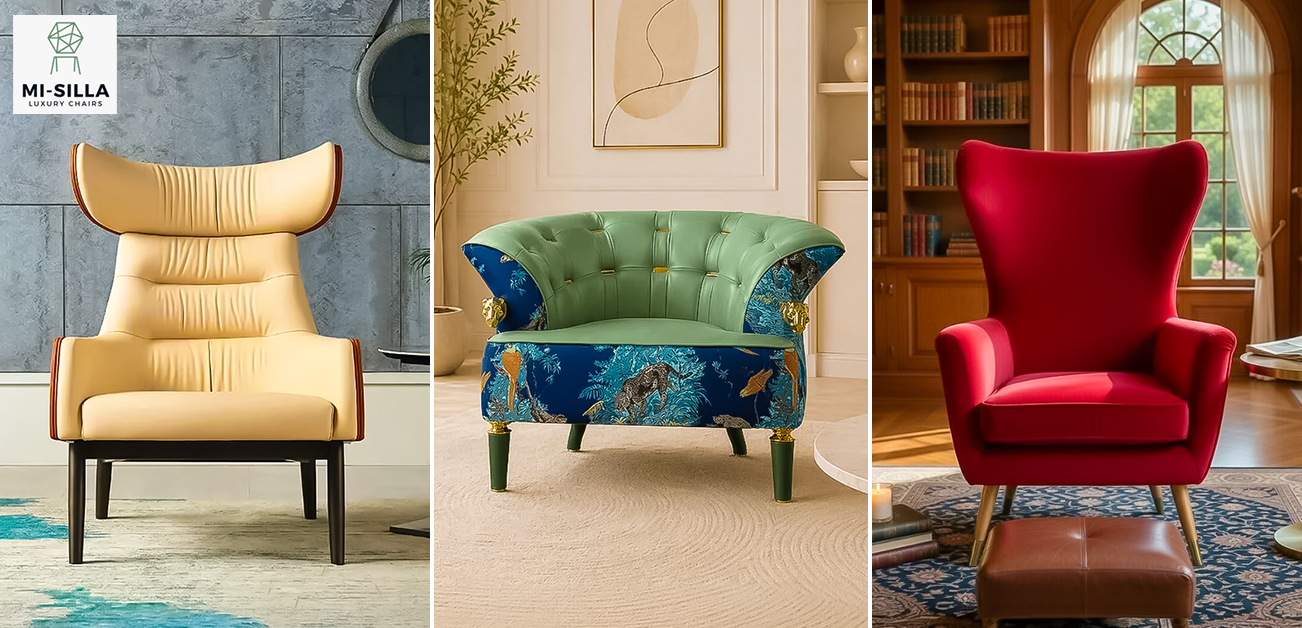
How to Choose a Modern Wingback Chair for Your Living Room in 2026?
Some chairs fill a room, and some chairs define it. A modern wingback chair belongs firmly in the second category. With its high, structured back and side wings that curve forward to frame the sitter, it brings a quality to a living room that sofas and accent pieces rarely manage on their own: a sense of deliberate, considered presence.
The wingback has been in continuous use for centuries. It has survived every design era and gracefully adapted to every aesthetic shift. Needless to say, it earned a permanent place in residential and hospitality interiors alike.
In 2026, it is as relevant as ever. It appears in everything from minimalist apartments to boutique hotel lobbies across the country.
This blog walks you through everything you need to know about wingback chairs. Learn what makes a wingback chair work as a key element in a living room, how to choose the right one for your space and project, and which Mi-Silla chair models are worth knowing about. Whether you are furnishing your own home or specifying seating for a client’s living room, this blog will guide you.
Why a Modern Wingback Chair Still Works in Today’s Living Room?
The wingback chair was originally created to shield the sitter from cold drafts. Those tall flanking sides, the wings, create a cocoon-like enclosure that was both useful and visually striking.
However, the function has changed considerably today, while the form still earns its place. In an open-plan living room, a wingback chair gives depth and visual structure. It creates a distinct seating place in the room without requiring a full sectional or additional sofa.
The silhouette of wingback chairs also adapts remarkably well to fabric. While a wingback feels moody and editorial in deep charcoal velvet, it becomes relaxed and organic in a soft linen or oatmeal boucle. So, the identical structure reads entirely differently depending on the material.
Interior designers frequently spec a modern wingback chair as the focal point of a seating grouping. It draws the eye, holds its own next to a fireplace or a large window, and works across a wide range of aesthetics, from transitional to mid-century to contemporary Scandinavian.
For homeowners, a well-chosen wingback chair can create a dedicated reading spot, a quieter seat away from the main sofa, or a statement piece that makes the living room feel more intentional and complete.
What is the Difference between an Armchair and a Wingback Chair?
An armchair is typically crafted for flexibility. An armchair is typically crafted for flexibility. It blends easily into a variety of layouts and does not demand any visual attention. However, a wingback chair has a more defined appeal and personality. Its tall back and signature side wings create a structure that makes it a focal point rather than a background piece.
These two chair styles are often grouped, but they serve very different roles in a space. Understanding how they differ helps you make more intentional design decisions, especially when selecting a statement piece like a modern wingback chair.
- Back Height and Structure
Armchairs typically have a lower back, which makes them ideal for casual seating. Wingback chairs, on the other hand, have a tall backrest that supports the head and shoulders. It hence creates a more enclosed and supportive feel.
- Side Design
Armchairs have open sides, which makes them feel lighter and more adaptable. Wingback chairs feature extended side panels, or “wings,” that frame the sitter and add a sense of privacy.
- Visual Presence
An armchair is more likely to blend into the room’s overall layout. A wingback chair stands out by adding height, structure, and architectural interest to the space.
- Best Use in a Room
Armchairs work well as flexible seating that can be moved or layered into different layouts. A wingback accent chair is more intentional, often placed to anchor a seating arrangement or highlight a specific area.
- Application in Dining Spaces
A wingback dining chair brings the same high back structure into the dining room. It offers greater comfort and a refined, upholstered look compared to standard dining chairs.
In simple terms, armchairs quietly support the overall layout, while wingback chairs add definition and presence.
How to Choose the Right Modern Wingback Chair in 2026?
Choosing well starts with being honest about the space and the priorities. These are the factors that matter most.
- Scale and Proportion
The wingback chair must be proportionate to the rest of the furniture. For a large living room with a substantial sofa, a full-scale wingback is the correct addition. But, for a smaller space, a slimmer, lower-winged version is a more suitable addition.
Measure the footprint before buying. Account for legroom around the chair, especially if you plan to pair it with an ottoman or a side table.
- Style Alignment
Pay attention to the leg profile while choosing. While tapered wooden legs in walnut or beech read as mid-century or transitional style, turned legs add a traditional touch. Square legs with a minimal finish push the chair toward a contemporary aesthetic.
The wing shape also carries meaning. Curved, scrolled wings recall a vintage wingback chair aesthetic. Sharper, more angular wings feel current and clean.
- Upholstery and Texture
Fabric is one of the most impactful choices when selecting a wingback chair. A contemporary wingback chair in textured linen or a wool-blend feels relaxed and residential. The same frame in a performance leather or boucle reads more premium.
If the chair is for daily use, durability matters just as much as appearance. Performance fabrics, durable leathers, and well-finished wood details tend to offer the best balance of comfort, longevity, and visual refinement. If the chair is primarily a statement piece in a lower-traffic room, you have more freedom to prioritize texture and character.
- Function
A wingback recliner chair has a much different function in a room than a stationary accent piece. If comfortable seating over long periods is your priority, make sure the design offers adequate lumbar support and seat depth for extended sitting.
If the chair you’re buying is primarily to add visual effect with occasional use, the silhouette can carry more weight than the ergonomics.
Choosing Upholstery, Wood Finish, and Proportion for Your Space
How to decide the upholstery, wood finish, and proportion of a wingback chair?
These three variables determine whether a modern wingback chair feels intentional or accidental in a room. So, you must be deliberate while choosing these.
- Upholstery
Neutral tones give the longest design life. Warm whites, soft grays, earthy taupes, and camel all work across multiple palettes and multiple years. Bolder choices like deep navy, forest green, or rust can anchor a seasonal or client-specific scheme without feeling forced.
For a formal residential setting, a leather wingback chair introduces strength and a sense of permanence. It is also easier to maintain in commercial settings.
- Wood Finish
The leg finish should connect to at least one other element in the room, such as the coffee table, a media console, or a lamp base. This creates cohesion without making everything match. Walnut finish is a consistently strong choice as it is warm, contemporary, and compatible with both light and dark upholstery.
- Proportion
Seat height is often overlooked while picking a wingback chair. Some pieces sit too low, creating a sinking feeling, which makes it harder to stand up, particularly for elderly individuals. Therefore, choose a seat height between 17 and 19 inches that works well for most adults.
The wing width also affects the feel of the chair. Wider wings create a more enclosed, intimate experience, while narrower wings feel more open and less formal.
Wingback Chair Guidance for Homeowners, Designers, Specifiers, and Hospitality Projects
Wingback chairs are more than decorative pieces. They shape how a space functions, how people experience it, and how the overall design is perceived. A thoughtfully selected modern wingback chair can define seating zones, add privacy in open layouts, and introduce a sense of structure that feels intentional.
For homeowners, this means creating a living room, reading corner, or lounge area that feels more refined, comfortable, and visually complete. For designers, specifiers, and hospitality teams, the decision goes beyond style. It also involves durability, consistency, and how well the chair performs over time in real-world conditions.
Use Case 1: Boutique Hotel Lounge
In a boutique hotel lounge, seating needs to feel inviting while still maintaining a clear design identity. Wingback chairs are often used to create smaller, more intimate seating areas within a larger open space.
A designer might place pairs of chairs near a fireplace or cluster them around low tables to encourage conversation. The high back and wings naturally create a sense of enclosure, which guests tend to gravitate toward.
Key considerations in this type of project include:
- Performance fabrics that can handle frequent use without losing their look
- Fire-rated materials to meet hospitality safety requirements
- Consistent sizing and detailing across all units for a cohesive layout
- Production timelines that align with opening schedules and installation phases
Use Case 2: Residential Living Rooms and Multi-Unit Projects
In residential spaces, a modern wingback chair can anchor a seating area, create a quiet reading corner, or add height and character to a room that needs a stronger focal point. Homeowners are often looking for a piece that feels comfortable for daily use while still elevating the overall look of the space.
In multi-unit residential projects, furniture selection often needs to balance visual appeal with practicality. Developers are looking for pieces that elevate the space aesthetically while staying within budget and holding up over time.
A modern wingback chair works well in private living rooms, model units, lobbies, and shared amenity spaces because it adds character without overwhelming the design.
Mi-Silla supports these types of projects by offering:
- Custom finishes that align with the overall interior palette
- Scalable production for larger quantities without compromising quality
- Ongoing collaboration with design teams to meet specific project requirements
For homeowners, this same flexibility makes it easier to choose a chair that feels tailored to the room’s proportions, materials, and personal style. For professionals, it helps maintain design intent while meeting the realities of construction timelines and procurement.
Technical Considerations
Beyond aesthetics, several technical factors influence how a chair performs over time, whether in a home or a commercial setting.
- Frame construction: A strong internal frame is essential for long-term durability, especially in high-traffic areas or frequently used family spaces
- Foam density and comfort: The right cushioning helps the chair maintain its shape while still providing comfort for daily use
- Fabric performance: Abrasion resistance, stain protection, and cleanability all play a role in material selection
- Logistics and delivery: Packaging, shipping methods, and installation coordination can impact project timelines and overall efficiency
When these details are addressed early in the process, the result is a seating solution that looks good on day one and continues to perform well long after installation.
Customization Options for a Bespoke Wingback Chair
No doubt, off-the-shelf options are useful. But custom options are transformative.
Mi-Silla offers a range of customization options that allow a wingback chair to be matched to a specific interior concept rather than worked around as a standard product.
Available customizations include:
- Upholstery fabric (choose from available options in a wide range of soothing shades)
- Leg finish (walnut, beech, black, natural, and custom stain options)
- Seat cushion firmness for functional adjustments
- Arm height and width in select models
- Size adjustments on request for hospitality or large-scale orders
Customization enables designers to get chairs that fit into their cohesive design system. The silhouette stays consistent, and the material reflects the client’s unique story.
Modern Wingback Chairs That Add Comfort, Character, and Presence
The following wingback chairs from Mi-Silla’s current collection represent different points on the spectrum, from classically influenced pieces to fully contemporary ones. Each is unique in its own way and plays out brilliantly in a modern living room.
Check them out to find a wingback chair worth considering for your living room or next project.
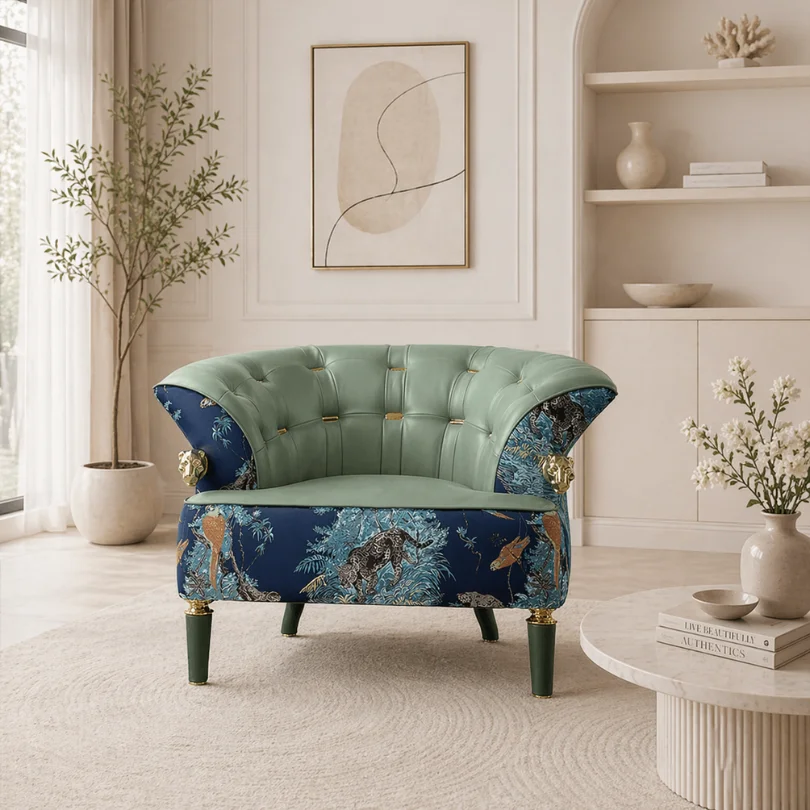
1. French Wingback
The French Wingback Chair brings a European sensibility to a modern living room. The high back and gently curved wings reference classical French furniture proportions, but clean lines and contemporary upholstery options keep it feeling current.
It works particularly well in transitional interiors where the goal is to introduce historical reference within a living space without going fully traditional. Pair the chair with a low-profile sofa and a sculptural side table to let the silhouette define the room.
For project specifiers, this chair reads with authority in hotel lobbies, private members’ clubs, and formal residential seating areas. The commanding back profile makes it a reliable focal point.
2. Wingback Wing Fabric Armchair
A more streamlined take on the wingback form, this Wingback Wing Fabric Armchair prioritizes clean geometry. The wings are shorter, the arms are low, and the overall silhouette reflects contemporary elegance without sacrificing the structural personality. It well defines the category.
It is a strong choice for modern living rooms already layered with pattern or furniture. Where other wingbacks might compete, this one integrates. In a textured neutral fabric, it becomes a quiet anchor. In statement upholstery, it holds the room.
It is also a practical option for slightly smaller living rooms where a full-scale wingback might overwhelm the layout.
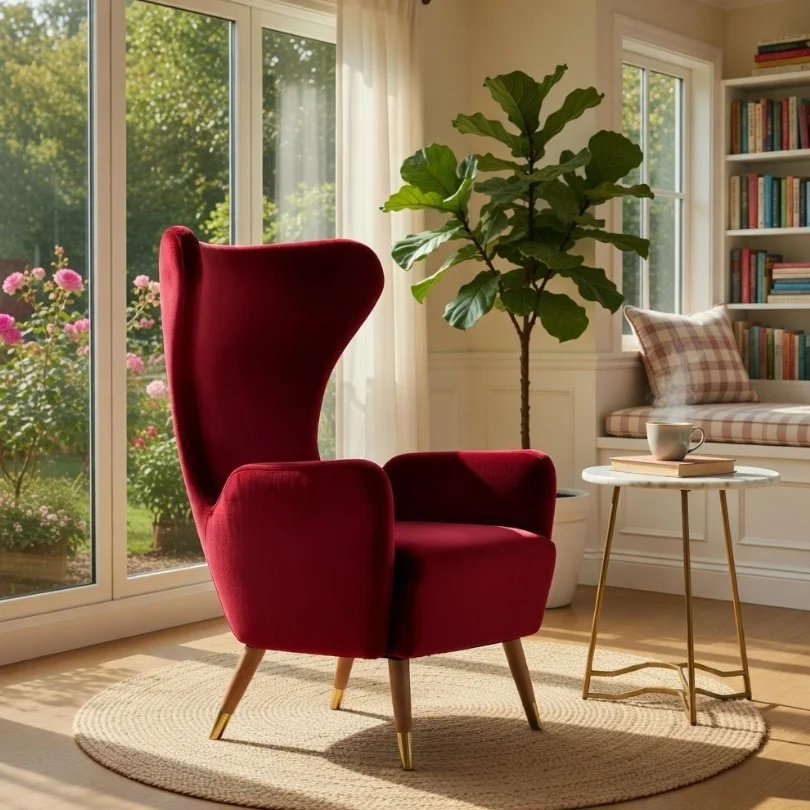
3. Beatrix Wing Fabric Armchair with Armrests
Mi-Silla brings this graceful piece in a diverse color palette, crafted for every type of interior. The Beatrix Wing Fabric Armchair with Armrests has a softer, more rounded wing profile that suits rooms where warmth and comfort are the primary goals. The armrests are well-proportioned and offer genuine support for extended sitting.
As an upholstered wingback chair, it works beautifully in a reading corner or beside a floor lamp with a small table. The curve of the back wraps slightly around the sitter. It creates the enclosed quality that is one of the wingback’s most distinctive attributes.
In a residential project for a family home, this chair earns its place as both a design statement and a genuinely comfortable daily seat.

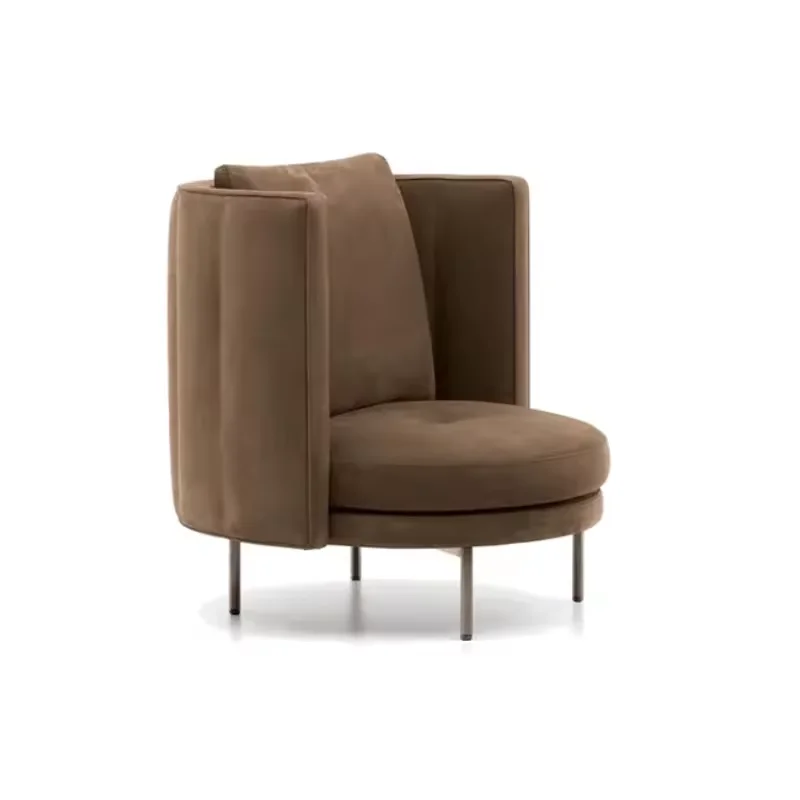
4. Tori Armchair Wingback
It’s a chair that defines contemporary elegance. The Tori Armchair Wingback has a distinctly contemporary wingback chair character. The structure is architectural: precise proportions, a firm back panel, and legs with a refined, minimal finish. It suits well-designed, sleek interiors with a disciplined, intentional design language.
This is a chair for spaces where visual impact matters without ornamentation. The form does all the magic. It sits well in both residential and hospitality environments, particularly where the aesthetic runs toward Scandinavian or mid-century modern.
You can customize it in a dark fabric for strong visual contrast or in a warm neutral to let it integrate into a broader upholstery palette.
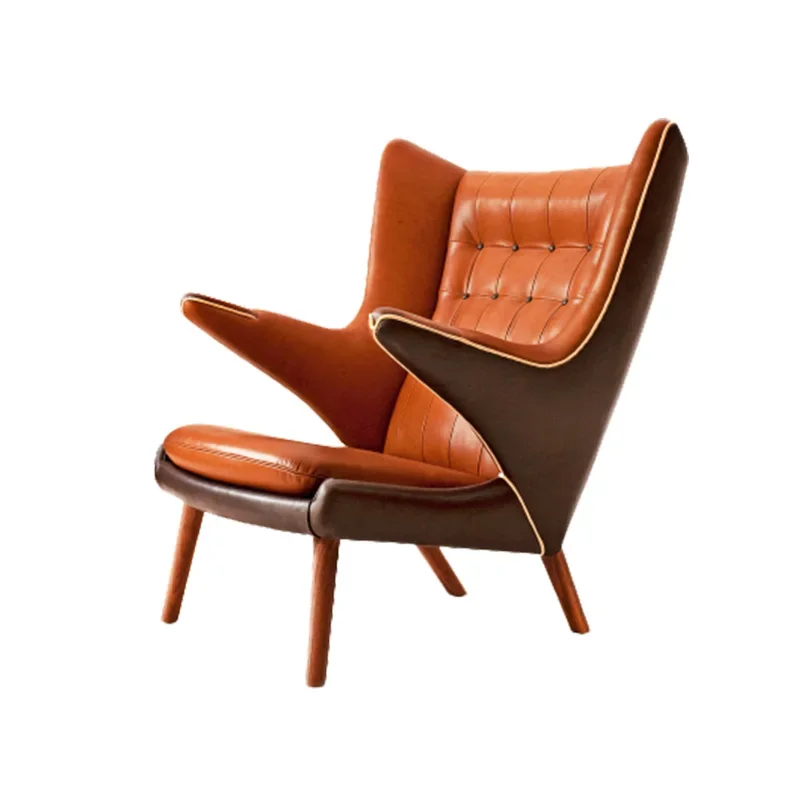
5. Papa Bear Lounge Wingback Chair
We have this timeless classic, Papa Bear Lounge Wingback Chair! It is the most generous chair in the collection with a signature design and extra comfort. Inspired by Hans Wegner’s iconic lounge chair, it takes the wingback form and reinterprets it through a mid-century lens. The wings are broad and enveloping, the seat is deep, and the whole chair invites extended time.
This is the chair you can always come back to. It holds you well, looks exceptional from every angle, and anchors a living room in the way that only a considered lounge chair can.
It is a strong spec choice for executive lounges, high-end residential spaces, and hospitality settings where substance and quality need to be communicated immediately. It pairs naturally with solid wood furniture and natural textiles, which makes it a popular designer’s choice.
Discover Bespoke Wingback Chairs from Mi-Silla for Refined Interiors!
The modern wingback chair continues to evolve while maintaining its core appeal. It offers comfort, structure, and a strong visual identity that enhances both residential and hospitality interiors.
Choosing the right piece involves careful consideration of scale, materials, function, and overall design intent. With the added advantage of customization, a wingback chair can become a defining element in any living room.
At Mi-Silla, we work with homeowners, interior designers, architects, and hospitality specifiers across the US! Our wingback chairs are made-to-order, available in a range of upholstery and wood finish options, and suited for both residential and commercial environments.
Furnishing a single room or sourcing for a multi-unit residential project, we are here to support the process from initial selection through to final specification.
Browse the full collection of wingback chairs or contact us directly to discuss custom options, requests, lead times, and project pricing.
FAQs
Where should a wingback chair be placed?
Wingback chairs work best as a focal point in the room, near a fireplace, beside a large window, or positioned at a 45-degree angle to a sofa. Avoid pushing the chair flat against a wall. The back profile is part of what makes it visually interesting, and it deserves space to be seen from multiple angles.
How many types of wing chairs are there?
The main variants include the traditional high-back wingback, the contemporary wingback chair with a cleaner silhouette, the wingback recliner chair, the wingback dining chair for table-height use, and the lounge wingback with deeper proportions. Each serves a different purpose and suits a different room context.
Why were wingback chairs popular?
Wingback chairs became popular in 17th-century England and France as a response to the cold, drafty interiors of the time. The high sides shielded the sitter’s head from heat loss near an open fire.
Over time, the form became associated with comfort, status, and considered furnishing, an association the silhouette has maintained for centuries.
What colors are trending for wingback chairs in 2026?
Warm neutrals continue to dominate, such as camel, warm white, oatmeal, and dusty rose, which are all seeing strong interest this year.
On the bolder end, deep olive, terracotta, and cognac are appearing frequently in both residential and hospitality projects. Vintage wingback chair reproductions in worn leather and jewel-toned velvets are also popular for eclectic and maximalist interiors.
Are wingback chairs comfortable for everyday use?
Yes, provided the seat depth and cushion firmness are appropriate for the user. The back of a wingback chair naturally supports the shoulders and neck, which many sitters find more comfortable than the open back of an armchair over extended periods. The Beatrix and Papa Bear models from Mi-Silla are specifically designed for sustained comfort in residential settings.
Are customizable wingback chairs worth specifying?
For professional projects, customization is often the difference between a chair that fits a scheme and one that merely works in it. When fabric, leg finish, and proportion can all be adjusted, the chair becomes part of a cohesive design story. Mi-Silla’s customization options make this accessible across most project scales.
What common mistakes should professionals avoid?
The most common mistake is misjudging scale, such as specifying a full-height wingback in a low-ceilinged room. One may also ignore leg finish cohesion across the furniture plan and select upholstery without considering maintenance requirements in commercial settings.
It is also worth checking seat height against other seating in the room; mismatched heights create visual tension that undermines an otherwise considered layout.
How do wingback chairs fit into modern vs. transitional interiors?
In a modern interior, choose a wingback with clean lines, restrained wings, and a low-contrast material palette. Metal or square-profile legs in black or brushed brass work well.
In a transitional interior, the traditional wingback silhouette reads beautifully when upholstered in a contemporary fabric and paired with current accessories. The silhouette bridges the gap between the two.