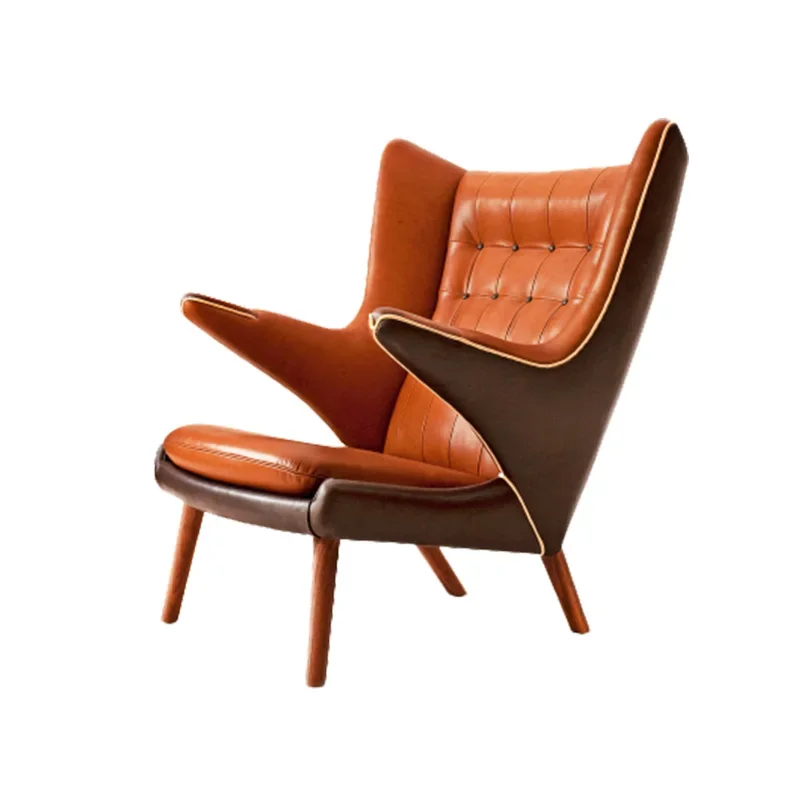
Where should a wingback chair be placed?
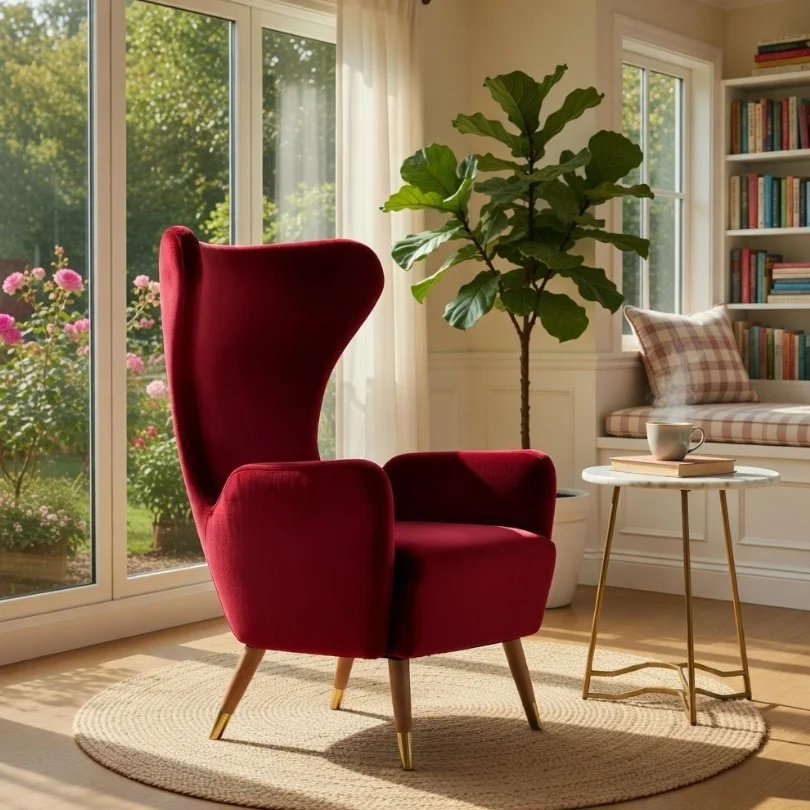
Wingback chairs work best as a focal point in the room, near a fireplace, beside a large window, or positioned at a 45-degree angle to a sofa. Avoid pushing the chair flat against a wall. The back profile is part of what makes it visually interesting, and it deserves space to be seen from multiple angles.
How many types of wing chairs are there?
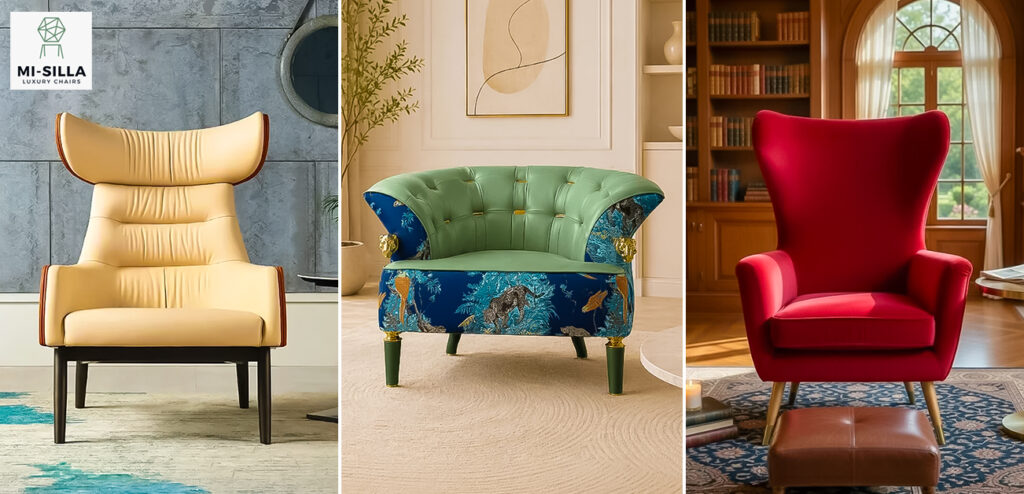
The main variants include the traditional high-back wingback, the contemporary wingback chair with a cleaner silhouette, the wingback recliner chair, the wingback dining chair for table-height use, and the lounge wingback with deeper proportions. Each serves a different purpose and suits a different room context.
Why were wingback chairs popular?
Wingback chairs became popular in 17th-century England and France as a response to the cold, drafty interiors of the time. The high sides shielded the sitter’s head from heat loss near an open fire.
Over time, the form became associated with comfort, status, and considered furnishing, an association the silhouette has maintained for centuries.
What colors are trending for wingback chairs in 2026?
Warm neutrals continue to dominate, such as camel, warm white, oatmeal, and dusty rose, which are all seeing strong interest this year.
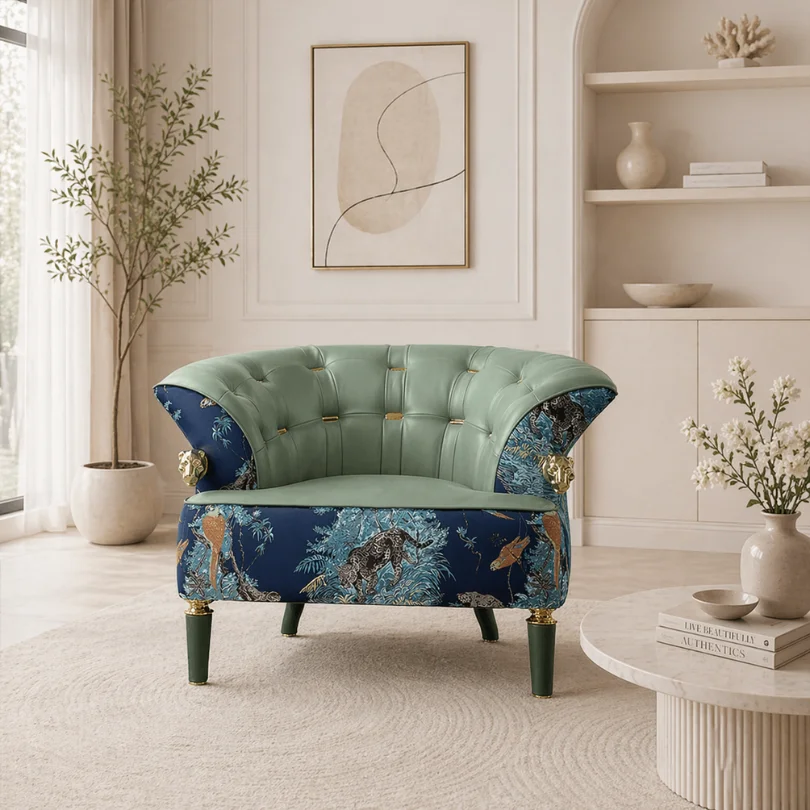
On the bolder end, deep olive, terracotta, and cognac are appearing frequently in both residential and hospitality projects. Vintage wingback chair reproductions in worn leather and jewel-toned velvets are also popular for eclectic and maximalist interiors.
Are wingback chairs comfortable for everyday use?
Yes, provided the seat depth and cushion firmness are appropriate for the user. The back of a wingback chair naturally supports the shoulders and neck, which many sitters find more comfortable than the open back of an armchair over extended periods. The Beatrix and Papa Bear models from Mi-Silla are specifically designed for sustained comfort in residential settings.
Are customizable wingback chairs worth specifying?
For professional projects, customization is often the difference between a chair that fits a scheme and one that merely works in it. When fabric, leg finish, and proportion can all be adjusted, the chair becomes part of a cohesive design story. Mi-Silla’s customization options make this accessible across most project scales.
What common mistakes should professionals avoid?
The most common mistake is misjudging scale, such as specifying a full-height wingback in a low-ceilinged room. One may also ignore leg finish cohesion across the furniture plan and select upholstery without considering maintenance requirements in commercial settings.
It is also worth checking seat height against other seating in the room; mismatched heights create visual tension that undermines an otherwise considered layout.
How do wingback chairs fit into modern vs. transitional interiors?
In a modern interior, choose a wingback with clean lines, restrained wings, and a low-contrast material palette. Metal or square-profile legs in black or brushed brass work well.
In a transitional interior, the traditional wingback silhouette reads beautifully when upholstered in a contemporary fabric and paired with current accessories. The silhouette bridges the gap between the two.