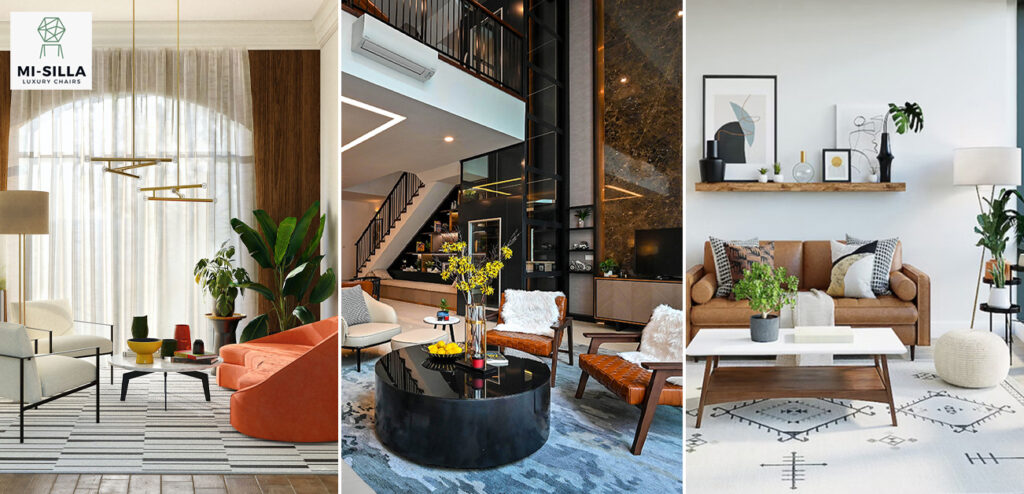
Many people ask: What is color drenching a room? At its core, it’s the practice of applying a single color, or closely related shades, across multiple surfaces within a space. This typically includes walls, ceilings, interior trim, and, often, furniture and upholstery.
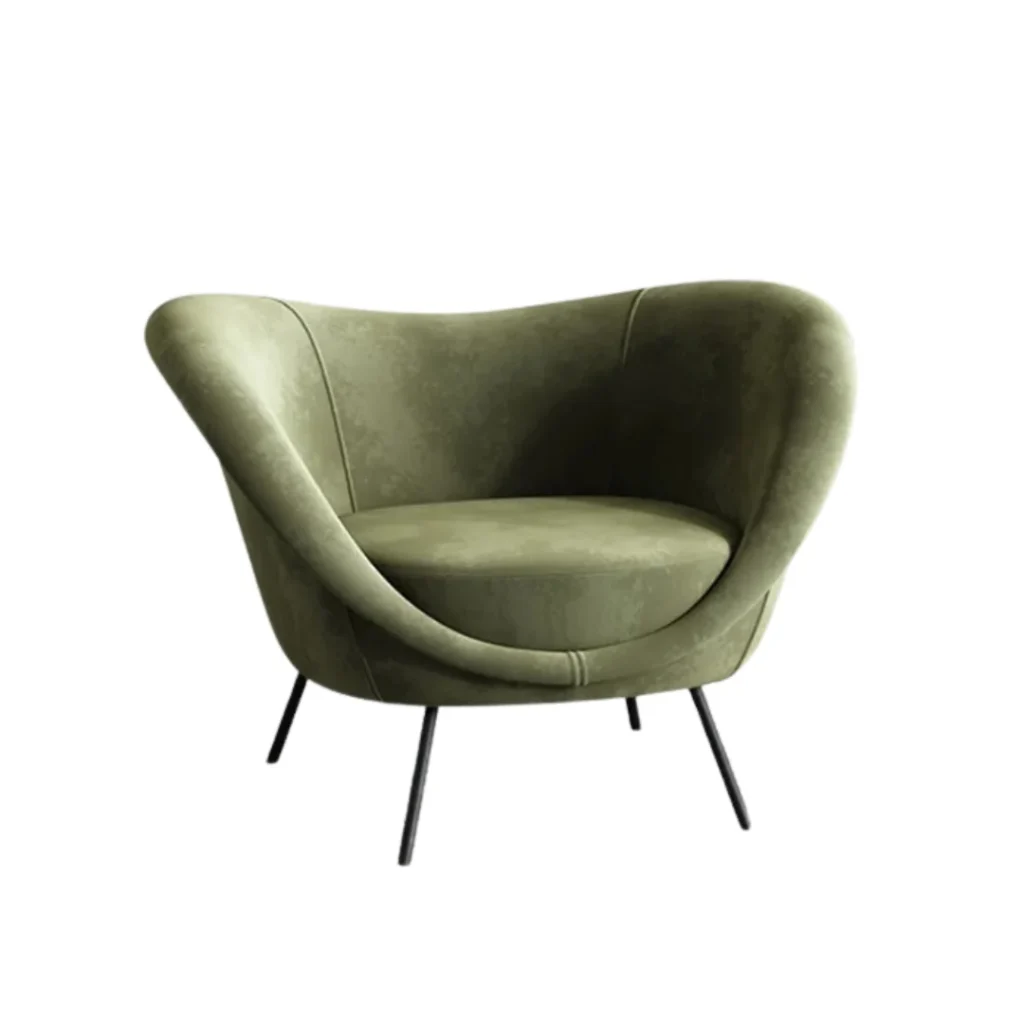
However, effective color drenching is not just painting everything the same shade. It is about tonal harmony across materials and finishes. A matte wall finish may sit alongside a slightly satin ceiling. Furniture, such as a sculptural Luxury Totu Armchair, can be upholstered in related hues without breaking cohesion. By maintaining this dialogue, spaces feel layered and unified rather than flat.
This approach differs from traditional monochromatic design, which can sometimes feel static. Color drenching allows for subtle variation while preserving continuity. It also differs from accent-heavy schemes that rely on contrast to engage the eye. Here, color serves as a backdrop that elevates texture, materials, and form.
In before-and-after projects, fragmented rooms often become visually continuous-supporting flow, proportion, and calm.
A Step-by-Step Color Drenching Process (That Doesn’t Feel Flat)
- Choose a base color family (warm neutral, muted green, dusty blue).
- Map the finishes (matte walls, softer-satin ceiling, consistent trim strategy).
- Test the color in morning vs. evening light before committing.
- Paint the “envelope” first (walls + ceiling + trim/doors if relevant).
- Add texture in the same tonal range (bouclé, linen blends, brushed metals, wood grain).
- Bring furniture into the palette (match, blend, or layer within nearby shades).
- Lock in lighting (directional + ambient) to highlight texture and shape.
What Designers and Architects Should Confirm on Color-Drenched Projects
- Paint plan by surface (walls/ceiling/trim/doors) + sheen schedule for each.
- Sample approvals in the actual site lighting (day + night).
- Material coordination: wood stains, metal finishes, stone undertones (to avoid “off” clashes).
- Upholstery and COM/COL alignment (undertones, dye lots, repeats, directionality).
- Site constraints + timeline: access, protection, staging, lead times for custom pieces.
Why Color Drenching Works So Well in Modern Spaces?
Modern interiors advocate openness, flexibility, and emotional comfort, all of which are made possible by living rooms that can be transformed into multifunctional spaces. Color drenching will support all those three factors by reducing visual noise and enabling the eye to move naturally from one area to another.
In open-plan homes, color drenching can make disparate areas feel unified. For example, a single wall tone that wraps from a living area through to a dining area creates harmony, especially when paired with cohesive furniture choices like the Lido Armchairs in transcendent upholstery. This same principle applies in a color-drenching dining room, where consistency across seating and built-ins encourages seamless connection between spaces.
From a spatial perspective, color drenching subtly shapes perception. Darker tones can make large rooms feel more intimate, while lighter tones visually expand smaller spaces without structural changes. Designers frequently use this technique to refine proportions in multifunctional areas.
Emotionally, consistent color environments tend to support relaxation and focus. Many homeowners describe color-drenched rooms as easier to inhabit, spaces that don’t demand attention but quietly support daily routines and lived experience.