FREE SHIPPING On All Orders

Modern slipper chair and chaise lounge designs blending comfort, luxury, and contemporary interior style.

Slipper Chair Design Ideas for Comfort and Style in 2026

There is a particular kind of chair that earns its place in a room through quiet confidence rather than visual dominance. It does not need arms to make a statement. It does not need a high back to command attention.

A slipper chair works through proportion, material, and placement. In a well-designed interior, it fills exactly the gap that a sofa or accent chair cannot.

The category has expanded considerably in recent years. What began as a low-profile bedroom chair has grown to include daybed hybrids, chaise longue forms, lounge configurations, and adjustable recliners, each carrying the essential slipper chair DNA of a backrest that rises directly from the seat without the interruption of arms.

In 2026, the design range is wide enough to serve a primary bedroom reading corner, a hotel suite sitting area, a home office lounge zone, or a hospitality lobby with equal confidence.

This post covers the full picture: what distinguishes a slipper chair from other seating categories, how to style and choose one, and nine specific design ideas drawn from the Mi-Silla collection, each grounded in a real room context and a real use case. It also shows how slipper chairs fit into Mi Silla’s broader role as a one-stop luxury furniture source for refined residential and trade projects.

Difference Between a Slipper Chair and a Side Chair

The two categories are often confused, and the distinction matters when picking a chair for a room.

A side chair is defined by its versatility: it moves easily around a dining table, a desk, or a bedroom, and it typically features four legs, a modest seat, and a back that provides upright support for task-oriented use. The form is practical, and in many interiors it is exactly the right answer.

A slipper chair is built around a different use case. The seat sits lower to the floor, the backrest is fuller and more enveloping, and the absence of arms means the silhouette reads as a continuous upholstered form rather than a frame with a cushion inserted into it. The result is a chair that prioritizes relaxed comfort and visual softness over task support and portability.

While both serve as additional seating, slipper chairs and side chairs are designed for very different purposes.

  • Function: Side chairs are built for task-based use, like dining or desk work. Slipper chairs are made for relaxed, longer seating.
  • Seat Height: Side chairs have a standard height. Slipper chairs sit lower, creating a more laid-back posture.
  • Design: Side chairs usually have a visible frame with a separate seat and back. Slipper chairs feature a fully upholstered, continuous form.
  • Arms: Side chairs may include arms. Slipper chairs are always armless.
  • Comfort: Side chairs support upright sitting for shorter durations. Slipper chairs offer deeper comfort for lounging.
  • Placement: Side chairs fit dining areas, desks, or flexible seating needs. Slipper chairs work best in living rooms, bedrooms, or reading corners.

In simple terms, side chairs are practical and flexible, while slipper chairs are designed for comfort, style, and intentional placement.

How to Style a Slipper Chair in the Home?

A slipper chair styles most effectively when it is treated as a destination rather than a filler. The goal is a placement that makes the chair feel chosen and purposeful, not simply placed because there was space.

  • In the bedroom: Position the chair in a corner near natural light, paired with a floor lamp and a small side table. The combination creates a secondary zone within the room that functions for reading, dressing, or simply sitting away from the bed.
  • In the living room: A slipper chair placed at a right angle to a sofa completes a conversation group without the visual weight of a second full chair. Coordinate the upholstery with a secondary color in the room rather than matching the sofa directly; the contrast keeps the arrangement from reading as a set.
  • In a home office: A slipper chair in a lounge or chaise configuration gives a dedicated work room a second mode. The chair handles reading, calls, and the kind of thinking that does not happen well at a desk.
  • In a hospitality suite: A slipper chair or daybed hybrid in the sitting area of a suite gives guests a place to settle that is neither the bed nor an upright work chair. It is the piece that makes the room feel like a considered space rather than a functional one.

Benefits of Slipper Chairs in Modern Interiors

The practical case for a slipper chair in a modern interior is stronger than the category’s relatively quiet profile might suggest.

  • Space efficiency: Without arms, a slipper chair occupies a smaller footprint than an armchair of comparable seat depth. In rooms where floor space is limited, this matters considerably.
  • Visual lightness: The continuous upholstered silhouette of a slipper chair, especially one with exposed or slender legs, reads as lighter and less bulky than an armchair. In smaller rooms or rooms that already carry a lot of furniture, this visual quality is significant.
  • Design flexibility: A comfortable slipper chair adapts to more room contexts than almost any other seating category. It works in bedrooms, living rooms, offices, hotel suites, and reading nooks without requiring a specific surrounding style to make sense.
  • Upholstery impact: Because the form is relatively simple, the fabric and color of an upholstered slipper chair carry more visual weight than the same fabric on a more complex silhouette. A well-chosen velvet or performance fabric in a considered color can define a corner of a room with one piece.

Slipper Chair Guidance for Homeowners, Designers, and Hospitality Projects

The considerations that determine the right slipper chair differ depending on who is making the selection and for what context.

  • Homeowners

They are typically solving a specific room problem: a corner that needs a seat, a bedroom that needs a secondary zone, or a living room conversation group that needs completing.

The priority is usually a combination of comfort, visual fit with the existing room, and a material that holds up in daily household use. A contemporary slipper chair in a performance velvet or durable fabric weave handles most residential environments well.

  • Interior designers

Professionals in the design field approach the slipper chair as one component within a broader seating story. The chair needs to relate to the sofa, the rug, and the overall material palette in a way that feels composed rather than assembled.

Customization options, including COM (customer’s own material), leg finish, the ability to specify non-standard configurations, and the option to shift select pieces from fabric to leather, or leather to fabric, are often as important as the base design of the piece. For larger residential projects, lead time predictability and consistent finish quality across multiple units matter alongside the design itself.

  • Hospitality contractors

They need slipper chairs that perform reliably in high-traffic environments while maintaining the aesthetic quality that premium guests expect. Fire rating compliance, durability across intensive daily use, and the ability to order at volume with consistent finish results are non-negotiable requirements.

Mi-Silla works directly with contractors on project specifications, finish samples, and delivery coordination to meet these requirements without the friction that less project-oriented suppliers create.

How to Choose the Right Slipper Chair?

Four variables determine whether a slipper chair works in a specific room: seat height, scale relative to the room, upholstery material, and base or leg style.

  • Seat height: Slipper chairs traditionally sit lower than standard chairs, typically between 15 and 18 inches from the floor to the seat. A lower seat creates a more relaxed posture suited to reading and lounging. A slightly higher seat works better in rooms where the chair needs to relate to a dining or work surface.
  • Scale: A slipper chair that is scaled correctly for the room reads as placed with intention. One that is too large competes with the surrounding furniture; one that is too small disappears. As a rough reference, the chair back should sit comfortably below the top of a standard sofa arm when positioned alongside one.
  • Upholstery: Performance velvet, nubuck, flannel, and woven fabric weaves each carry a different register. Velvet reads as rich and formal; nubuck reads as contemporary and matte; flannel reads as soft and residential. Choose the material that matches the room’s existing texture vocabulary rather than introducing a new one.
  • Base and leg style: Slender metal or tapered wood legs create visual lightness and work well in minimal or contemporary rooms. A solid upholstered base reads as more substantial and suits rooms with a richer, more layered material palette.

Customization Options for Slipper Chairs

Mi-Silla’s slipper chair collection is built for adaptation. The base designs are strong enough to work as specified, but the customization options allow designers and contractors to align each piece precisely with a project’s material and spatial requirements.

  • Fabric: Performance velvet, nubuck, flannel, woven fabric, select leather options, and COM options cover the full range of residential and hospitality requirements. Fabric samples are available before order commitment.
  • Color: The standard palette spans neutrals, warm tones, jewel tones, and monochromes. Custom color matching is available for volume project orders where consistency across units is a requirement.
  • Leg and base finish: Matte black metal, brushed gold, chrome, and wood finishes are available across the collection. Aligning the leg finish with other hardware in the room is one of the details that lift a good interior into a composed one.
  • Configuration: For projects where standard dimensions do not fit a specific alcove, suite layout, or spatial constraint, the Mi-Silla team can discuss dimensional adjustments and configuration options that serve the room without compromising the design integrity of the piece.

Slipper Chair Design Ideas for Comfort and Style in 2026

Slipper chairs continue to evolve as a go-to choice for compact comfort and refined style in 2026. Their low, armless design makes them easy to place in almost any room, from living areas to bedrooms. With updated materials, textures, and silhouettes, these chairs now balance modern aesthetics with everyday functionality.

The following design ideas highlight how slipper chairs can add both visual interest and practical seating, helping you create spaces that feel inviting, well-composed, and effortlessly stylish.

1. Anchor a Home Office Reading Zone

A home office that functions only as a workspace misses an opportunity. Adding a lounge chair in a premium material creates a second mode within the room, a place to read, think, and decompress that is physically and visually separate from the desk.

Nubuck fabric in a muted tone carries a matte, tactile quality that reads as considered without competing with the desk as the room’s main focal point.

The Luxury Hollywood Modern Nubuck Fabric Lounge Chair with Metal Legs pairs the relaxed posture of a modern slipper chair with a material and leg combination that holds its own in a contemporary work environment.

The metal legs keep the silhouette light and current, while the nubuck seat and back deliver the tactile quality that makes a reading chair worth settling into. Position it near a window with a floor lamp behind it, and the reading zone becomes the most inviting corner of the room.
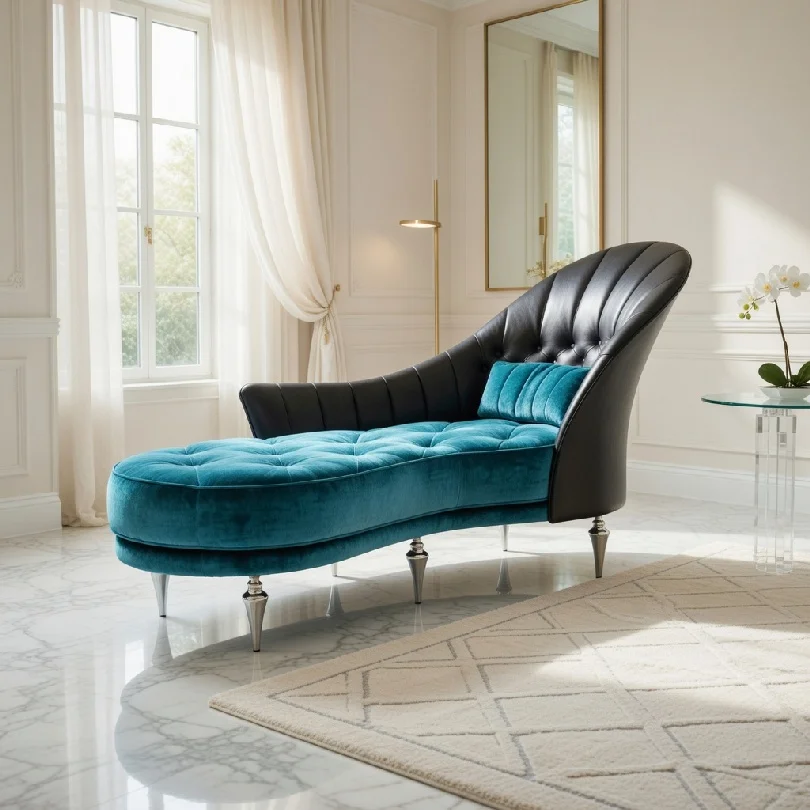
Luxury Hollywood modern lounge chair with teal nubuck fabric, black tufted backrest, and sleek metal legs
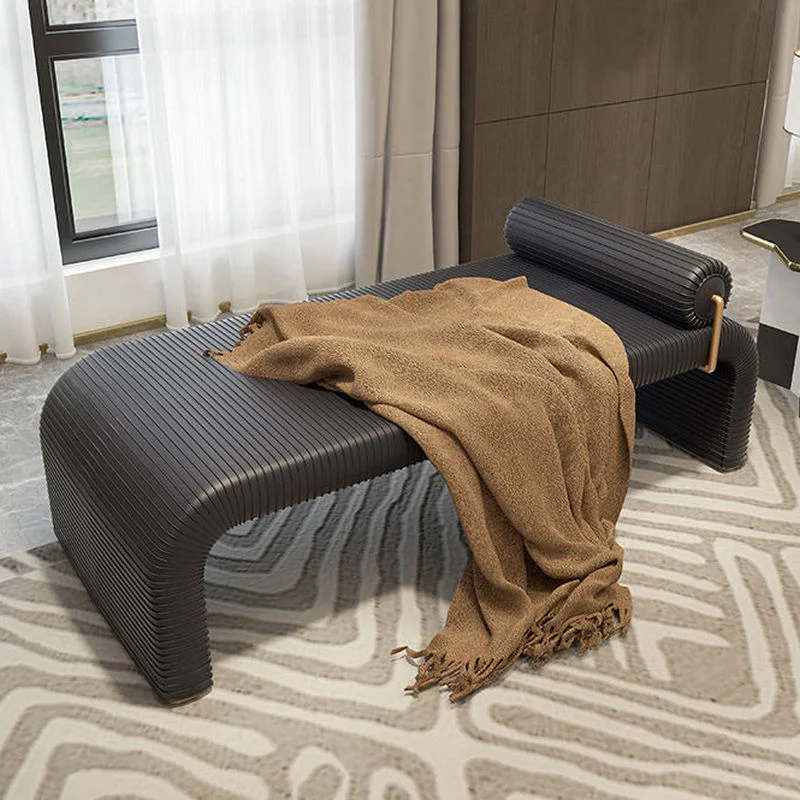
Cade Daybed Design Bench Slipper Chair in black ribbed leather with a brown throw blanket on a patterned rug.

2. Create a Suite Sitting Area

In a hotel suite or a primary bedroom with generous square footage, a daybed hybrid chair resolves the sitting area with a single piece that handles multiple modes of use. The long, low form allows for upright seated use, reclined reading, and lateral lounging, none of which a standard accent chair can accommodate.

For hospitality contractors specifying suite sitting zones, this form factor reduces the need for multiple supplemental pieces while delivering a stronger design statement than a single chair.

The Cade Daybed Design Bench Slipper Chair is built for exactly this application. Its horizontal proportion anchors a sitting area without dominating it, and the upholstered form reads as a stylish slipper chair with a daybed’s functional range.

For designers working on residential projects with large master suites, this piece creates the secondary seating destination that makes a bedroom feel like a genuinely considered suite rather than a room with a bed in it.

3. Chaise Longue Form into a Living Room Corner

A chaise sofa lounge configuration in a living room corner creates a designated relaxation zone that signals to anyone in the room that this is a space for comfort, not just aesthetics.

In a larger living room, this kind of secondary seating destination prevents the room from feeling one-dimensional and gives it a sense of depth that a single sofa arrangement rarely achieves.

The Chaise Sofa Lounge Slipper Chair brings a comfortable slipper chair sensibility to a chaise silhouette that works in living rooms without requiring the full square footage of a traditional chaise longue. Position it on a secondary rug in a corner, paired with a side table and a reading lamp, and the corner becomes a room within a room.

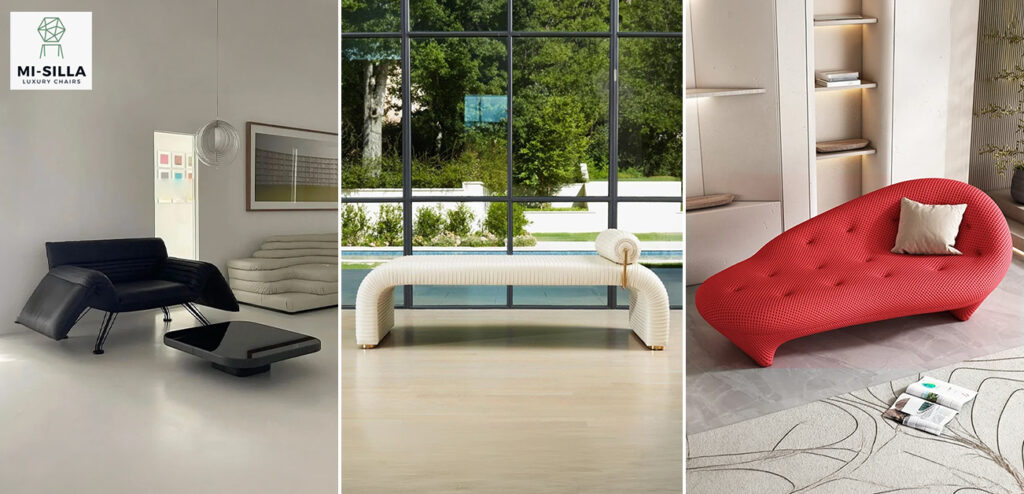
Chaise Sofa Lounge Slipper Chair in black leather with curved armrests and metal legs in a modern living room setting.
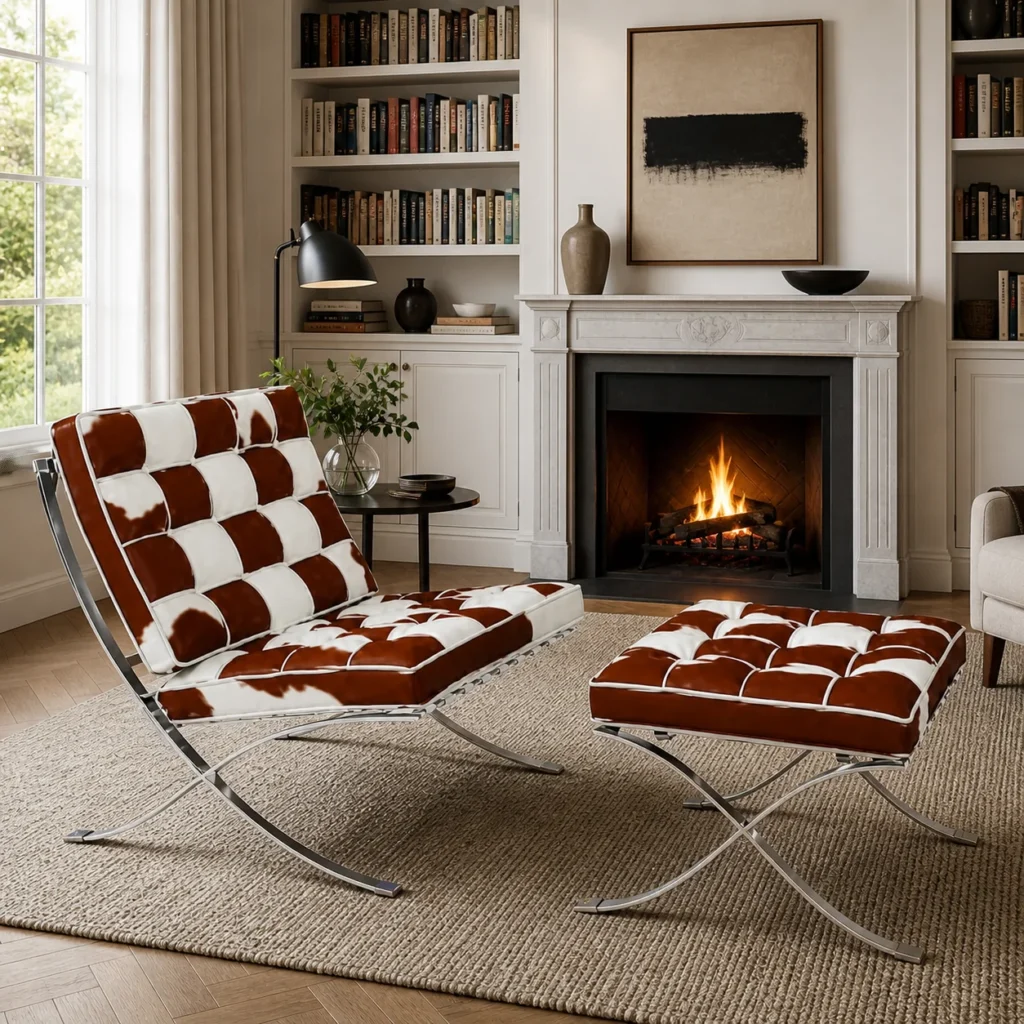
Cow Barcelona Relax Lounge Chair with matching ottoman in a brown and white cowhide pattern by a cozy fireplace.

4. Bold Lounge Chair as a Living Room Focal Point

A lounge chair with a distinctive silhouette does not need to be subtle. In a living room that is otherwise composed and restrained, a chair with a strong form and a considered upholstery choice becomes the focal point that gives the room its personality.

The key is that the chair earns this role through design quality rather than size.

The Cow Barcelona Relax Lounge Chair brings a designer slipper chair sensibility to a lounge form that is confident without being aggressive. Its organic shape references the mid-century lounge chair tradition while reading as contemporary in a 2026 interior.

Pair it with a minimal side table and let it occupy a corner of the living room as the piece around which the room is organized.

5. Chaise Longue Chair for a Bedroom Reading Nook

A bedroom reading nook anchored by a chaise longue form gives the room a secondary destination that is distinct from the bed and more committed than a standard accent chair.

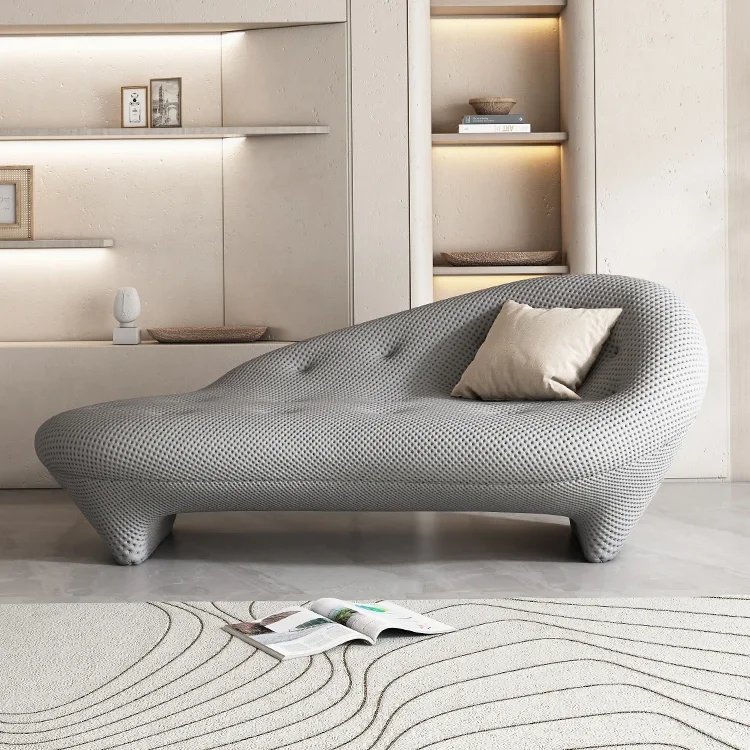
The elongated form allows for a fully reclined reading position, which a slipper chair cannot support, while the upholstered silhouette maintains the soft, residential material language of the bedroom.

The Chaise Longue Sofa Slipper Chair carries the proportions and comfort of a chaise longue in a form factor that fits a bedroom without overwhelming it.

Choose a fabric that coordinates with the bed upholstery and position the piece near the room’s best natural light source for a reading corner.

Modern grey textured Chaise Longue Sofa Slipper Chair with a cream pillow in a minimalist room with built-in lit shelving.
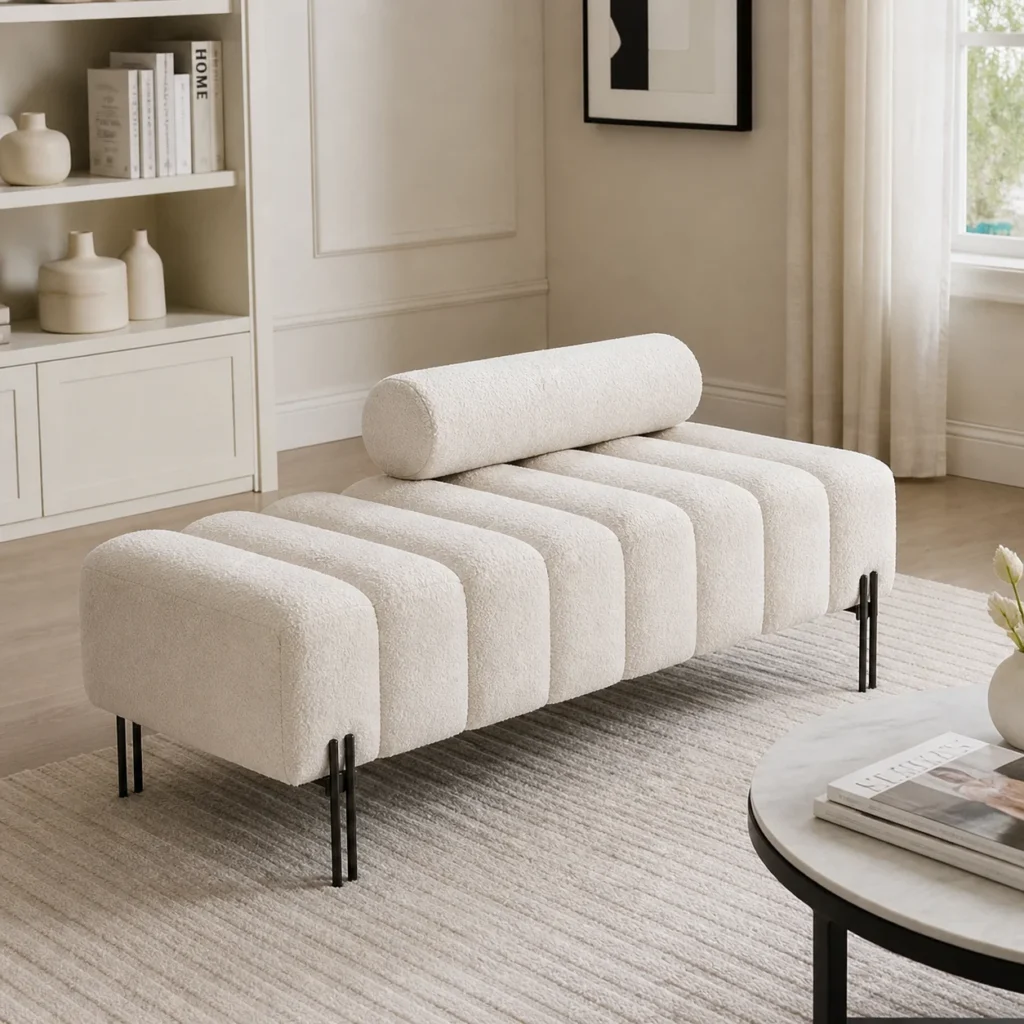
Living Room Velvet Bench Slipper Chair with cream tufted upholstery, cylindrical bolster, and black legs in a modern space.

6. Complementing a Living Room with a Velvet Bench Chair

A velvet bench chair occupies the overlap between a bench and a slipper chair, offering the horizontal proportion of a bench with the backrest support of a low chair.

In a living room where the main sofa is already fully upholstered, this hybrid form provides additional seating without adding another chair silhouette that competes with the sofa for visual dominance.

The Living Room Velvet Bench Slipper Chair resolves this with a velvet upholstery that carries the material richness of the living room category in a form that reads as an upholstered slipper chair without the full visual weight of a standard armchair.

Use it at a right angle to the sofa, on a rug that defines the seating zone, and the arrangement gains a piece that functions as both accent and additional seating.

7. Accent Chaise in an Underused Corner

Every home has at least one corner that is furnished with something generic because nothing better came to mind. A chaise accent piece with a distinctive profile converts that corner into a designed moment that serves an actual function.

The key is choosing a form that reads as intentional from across the room, not something that was placed there to fill space.

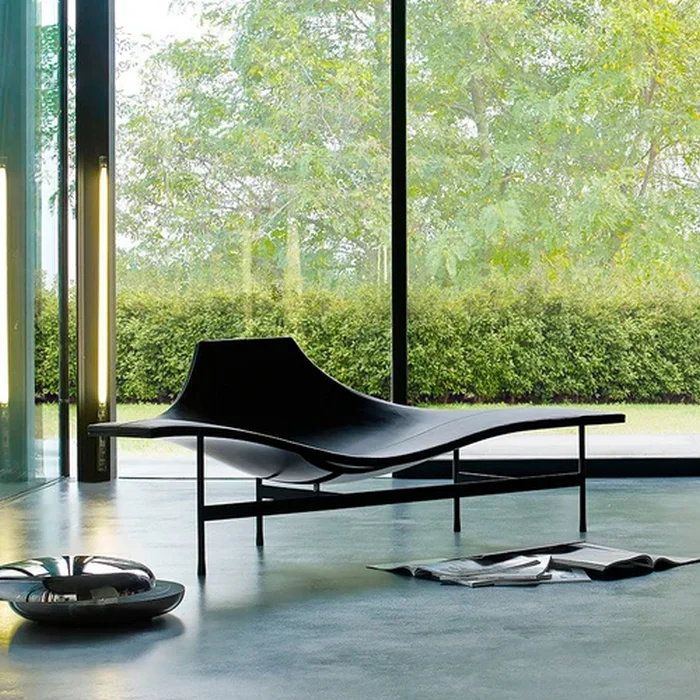
The Terminal 1 Chaise Accent carries a contemporary slipper chair profile with enough design confidence to anchor a corner as a focal point. Its chaise form is compact enough to work in rooms where a full chaise longue would be too large, and its upholstered silhouette reads as a considered choice.

Position it with a single floor lamp behind it for a corner that looks deliberate from every angle in the room.

Sleek black Terminal 1 Chaise Accent with a curved, ergonomic design set against a floor-to-ceiling window view of lush greenery.
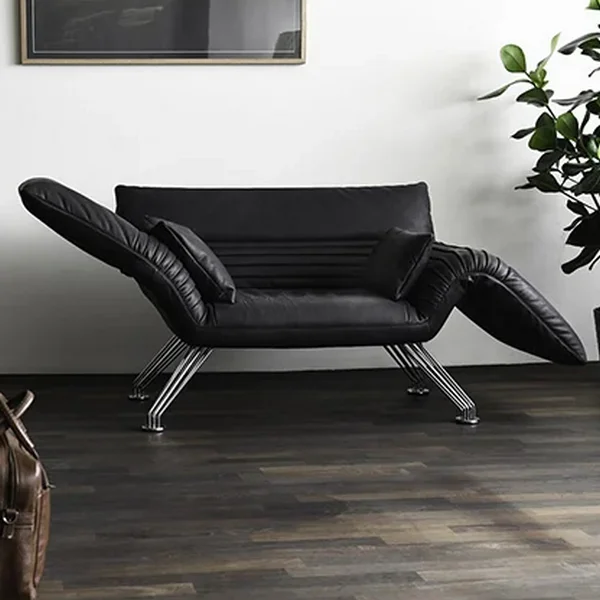
Modern MR Adjustable Chaise Lounge Slipper Chair featuring black ribbed leather cushions on a curved chrome frame.

8. Add Adjustable Functionality to a Lounge Space

An adjustable lounge chair brings a layer of functional flexibility that fixed seating cannot provide.

In a home wellness space, a spa treatment room, or a residential lounge area, the ability to adjust the backrest position means the chair serves across multiple uses, like reading, resting, receiving treatments, or simply sitting at a preferred angle.

For hospitality operators fitting out a spa or recovery lounge, this versatility is a material advantage over fixed seating.

The Mr. Adjustable Chaise Lounge Slipper Chair is the luxury modern bench category’s answer to this requirement: a modular slipper chair that adjusts to the user rather than requiring the user to adapt to a fixed position.

Its upholstered form maintains the design quality of the surrounding room while the adjustable mechanism delivers the kind of functional thoughtfulness that guests and residents notice without necessarily identifying.

9. Elevate a Dressing Room with a Boudoir Daybed Chair

A dressing room or suite sitting area needs a chair that performs at the intersection of decorative and functional. It should look like something selected with care and feel like something worth spending time in.

A boudoir daybed form in premium upholstery achieves both without requiring a large footprint.

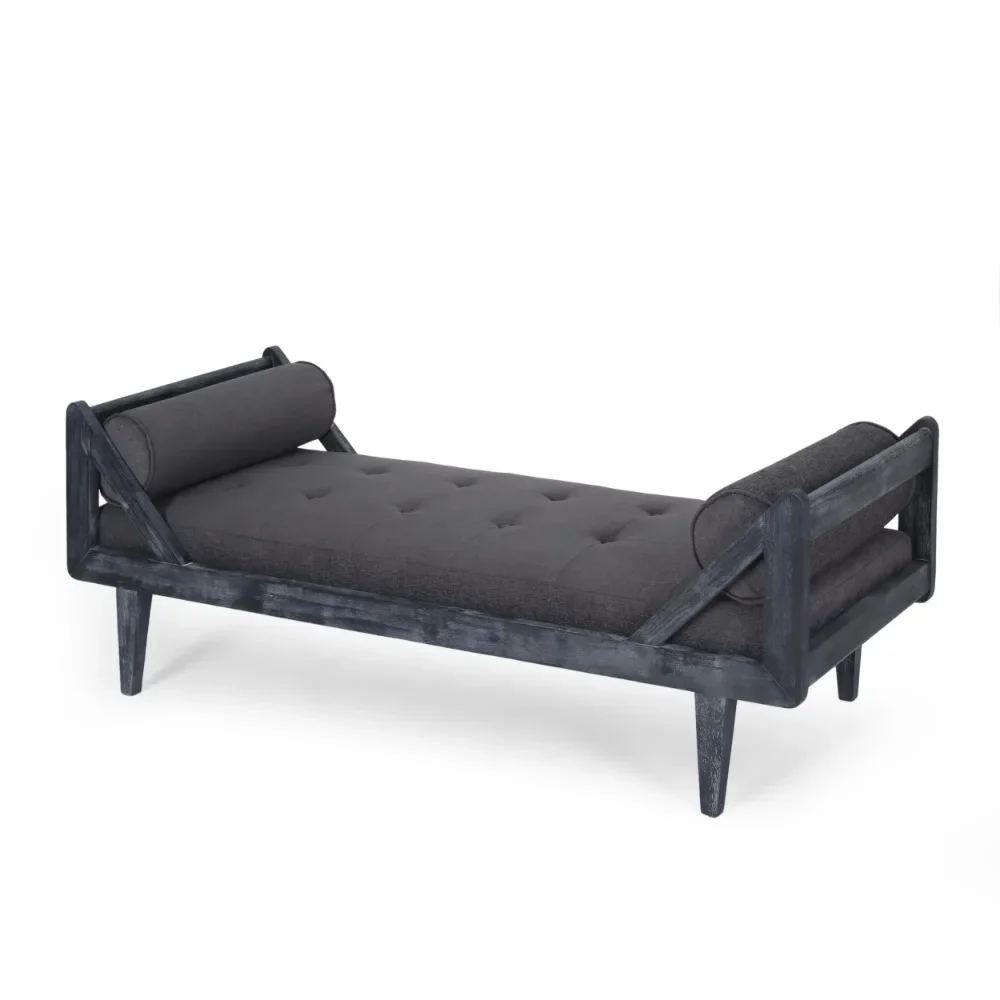
The Boudoir Daybed Sofa Bench brings the full material richness of a luxury slipper chair to a daybed form that works in dressing rooms, primary bedroom sitting areas, and boutique hotel suites alike. Its upholstered body and considered proportions read as a statement piece in any of these contexts, and its daybed form allows for a range of seated and reclined positions that a standard accent chair cannot accommodate.

For designers completing a high-end suite or dressing room furnishing schedule, this piece resolves the sitting area with one selection that carries the design register of the entire room.

Boudoir Daybed Sofa Bench: A charcoal-colored tufted bench featuring a dark wood frame with angular side rails and bolster pillows.

Discover Bespoke Slipper Chairs from Mi-Silla!

Mi-Silla approaches each project as a design partnership. The slipper chair collection spans lounge forms, daybed hybrids, chaise configurations, and adjustable recliners, giving designers, homeowners, and hospitality contractors a genuine range of directions rather than a set of near-identical variations on a single theme. For clients furnishing beyond a single chair, Mi Silla also serves as a one-stop luxury furniture source for coordinated seating, benches, tables, and accent pieces.

Customization options cover fabric, color, leg finish, and, for project-specific requirements, dimensional adjustments. The team works directly from plans and specifications, provides finish samples ahead of commitment, and coordinates delivery across multiple pieces within a single project scope.

If you are working on a room, a suite, or a larger project and want to discuss how a specific slipper chair from the Mi-Silla collection fits your brief, reach out directly. Send your plans, request a quote, or explore the full collection online.

FAQs

What is a slipper chair, and why is it called that?

A slipper chair is a low, armless upholstered chair with a full back. It was originally used in dressing rooms, where its lower height made it easier to put on shoes or slippers. Today, it’s used in living rooms and lounges for its compact size and relaxed comfort.

Are slipper chairs good for small spaces?

Yes. Slipper chairs work especially well in small spaces because they have no arms, which reduces their footprint. Their slim legs and low profile also create visual openness, making rooms feel less crowded while still adding comfortable and stylish seating.

Can slipper chairs be used outdoors?

Standard slipper chairs are designed for indoor use and are not built for outdoor exposure. However, they can work in covered areas like porches if upholstered in performance fabric. For fully outdoor settings, it’s better to choose furniture specifically designed for weather resistance.

How long does a slipper chair typically last in residential or hospitality use?

A well-made slipper chair can last over 10 years in residential settings. In hospitality spaces, durability depends on fabric choice and construction quality. Commercial-grade upholstery and strong frame joinery significantly extend lifespan, especially in high-traffic environments.

Are slipper chairs suitable for hospitality projects?

Yes. Slipper chairs are widely used in hotels, lounges, and waiting areas. For hospitality use, they must meet fire safety standards and use durable, commercial-grade fabrics. Consistent finishes and reliable production are also important for large-scale or multi-unit projects.

Which upholstery and finish options work best for a custom slipper chair?

The best upholstery depends on usage and design style. Performance velvet and woven fabrics offer durability, while nubuck provides a refined matte look, and select leather applications can deliver a sharper, more tailored finish. For finishes, match existing room tones, matte black for modern spaces, brushed gold for warmth, and natural wood for softer, organic interiors.

author avatar
developer
0
    0
    Your Cart
    Your cart is emptyReturn to Shop
    Skip to content